BPC-157 vs TB-500: A Research Comparison
A detailed research comparison of BPC-157 and TB-500, covering mechanisms, tissue repair applications, the Wolverine Stack combination, and dosing protocols.

BPC-157 and TB-500 rank among the most extensively investigated peptides in contemporary tissue repair and regeneration research. Despite sharing a broad area of scientific interest, each compound operates through distinct biochemical pathways and has been studied across different tissue types and experimental models. This guide examines the individual profiles of both peptides, places them in direct comparison across several research dimensions, and explores the scientific rationale for studying them in combination.
BPC-157: Origin, Structure, and Research Mechanisms
Molecular Background
BPC-157, abbreviated from Body Protection Compound-157, is a synthetic 15-amino-acid peptide derived from a sequence identified within a protective protein naturally present in human gastric juice. Its short chain length places it in the category of oligopeptides. What distinguishes BPC-157 from many other research peptides is its unusual resistance to degradation under acidic conditions: it maintains structural integrity in gastric environments where most peptides are rapidly broken down. This property has made it a subject of both injectable and oral formulation research.
Primary Research Mechanisms
Preclinical studies have identified several intersecting biological pathways through which BPC-157 appears to act:
- Angiogenesis promotion: BPC-157 has been shown to stimulate the formation of new blood vessels, a process central to tissue repair and nutrient delivery to injury sites.
- Nitric oxide pathway modulation: The compound interacts with nitric oxide (NO) signaling, influencing local vasodilation, blood flow regulation, and inflammatory tone.
- Growth factor interactions: Research models have recorded interactions with several growth factor systems, including vascular endothelial growth factor (VEGF), fibroblast growth factor (FGF), and epidermal growth factor (EGF).
- Gastrointestinal cytoprotection: A significant body of preclinical work documents protective effects on gastrointestinal mucosa, consistent with its origin in gastric tissue.
- Neuroprotective properties: Certain animal models have demonstrated neuroprotective activity, though this area of research remains at early stages.
The breadth of these observed mechanisms positions BPC-157 as one of the more versatile subjects in regenerative peptide research.
TB-500: Origin, Structure, and Research Mechanisms
Molecular Background
TB-500 is a synthetic peptide corresponding to the active domain of Thymosin Beta-4 (TB4), a naturally occurring 43-amino-acid protein found in virtually all human cell types. TB4 is among the most abundant intracellular proteins in the body and plays a fundamental role in cytoskeletal organization, cell survival, and tissue remodeling. TB-500 isolates the segment of TB4 responsible for its principal biological activities, allowing researchers to study those effects in a targeted manner.
Primary Research Mechanisms
TB-500's mechanism of action centers on its interaction with the actin cytoskeleton and processes related to cell motility:
- Actin upregulation: TB-500 promotes increased expression and availability of actin, the structural protein that enables cell movement and tissue reconstruction at injury sites.
- Cell migration facilitation: By modulating actin dynamics, TB-500 supports directed migration of repair-competent cells toward sites of tissue damage.
- Anti-inflammatory activity: Studies have observed reductions in inflammatory mediator expression following TB-500 administration in various animal models.
- Neovascularization support: Like BPC-157, TB-500 has demonstrated capacity to support new blood vessel growth, though via partially distinct upstream signals.
- Dermatological repair research: TB-500 has received attention in dermatology-adjacent studies due to its observed influence on hair follicle stem cell migration and wound healing in skin tissue models.
Head-to-Head Research Comparison
Tissue Repair Profiles
The two peptides are often described as complementary rather than redundant. BPC-157 has accumulated a particularly strong research record in gastrointestinal tissue models, tendon and ligament healing studies, and various organ-damage experimental paradigms. TB-500, by contrast, shows pronounced activity in skeletal muscle repair research, cardiac tissue models, and wound healing studies involving skin and connective tissue. In practice, the tissues each compound addresses most robustly overlap only partially, which underlies the scientific interest in studying them together.
Anti-Inflammatory Pathways
Both compounds have demonstrated anti-inflammatory properties in preclinical models, but they reach this outcome through different molecular routes. BPC-157 acts primarily through modulation of the nitric oxide system and downstream effects on inflammatory cytokine expression. TB-500 achieves its anti-inflammatory effects through actin-mediated regulation and modulation of immune cell behavior at injury sites. The divergence in mechanism raises the question of whether simultaneous administration might produce additive or synergistic effects on inflammatory resolution, a question several research groups have begun to address.
Stability and Administration Considerations
BPC-157's resistance to gastric acid degradation is a notable practical advantage in research design: it is one of the few peptides that has been meaningfully studied in oral formulations (including arginine salt tablet preparations) in addition to subcutaneous and intramuscular injection routes. TB-500 is considerably less stable under digestive conditions and is therefore studied almost exclusively via parenteral administration. This distinction may influence experimental design choices, particularly when systemic versus localized delivery is a variable of interest.
The Wolverine Stack: Combining BPC-157 and TB-500
The pairing of BPC-157 and TB-500 has become sufficiently well recognized in peptide research communities that it is commonly referred to as the "Wolverine Stack," a name reflecting the complementary regenerative depth the combination is hypothesized to offer. The scientific rationale is straightforward: BPC-157 brings angiogenic stimulation, NO-pathway modulation, and growth factor interactions, while TB-500 contributes actin upregulation and directed cell migration. Together, these two compounds address multiple distinct nodes in the tissue repair cascade rather than converging on a single pathway.
Where BPC-157 may accelerate the vascular and signaling environment required for repair, TB-500 supports the physical recruitment of repair-competent cells to the site of interest. Researchers studying complex or multi-tissue injury models may find the combination relevant precisely because real-world tissue damage rarely involves a single biological process.
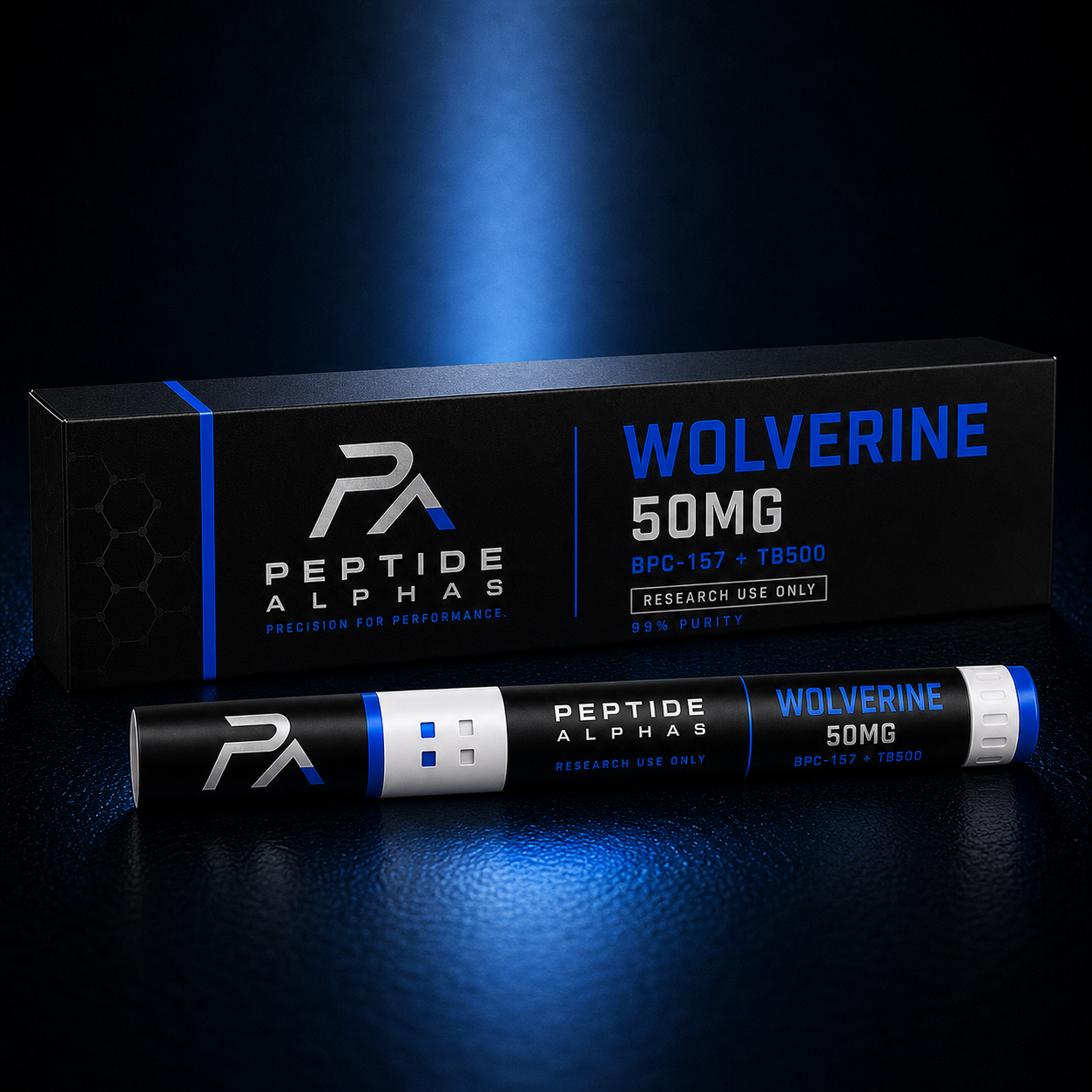
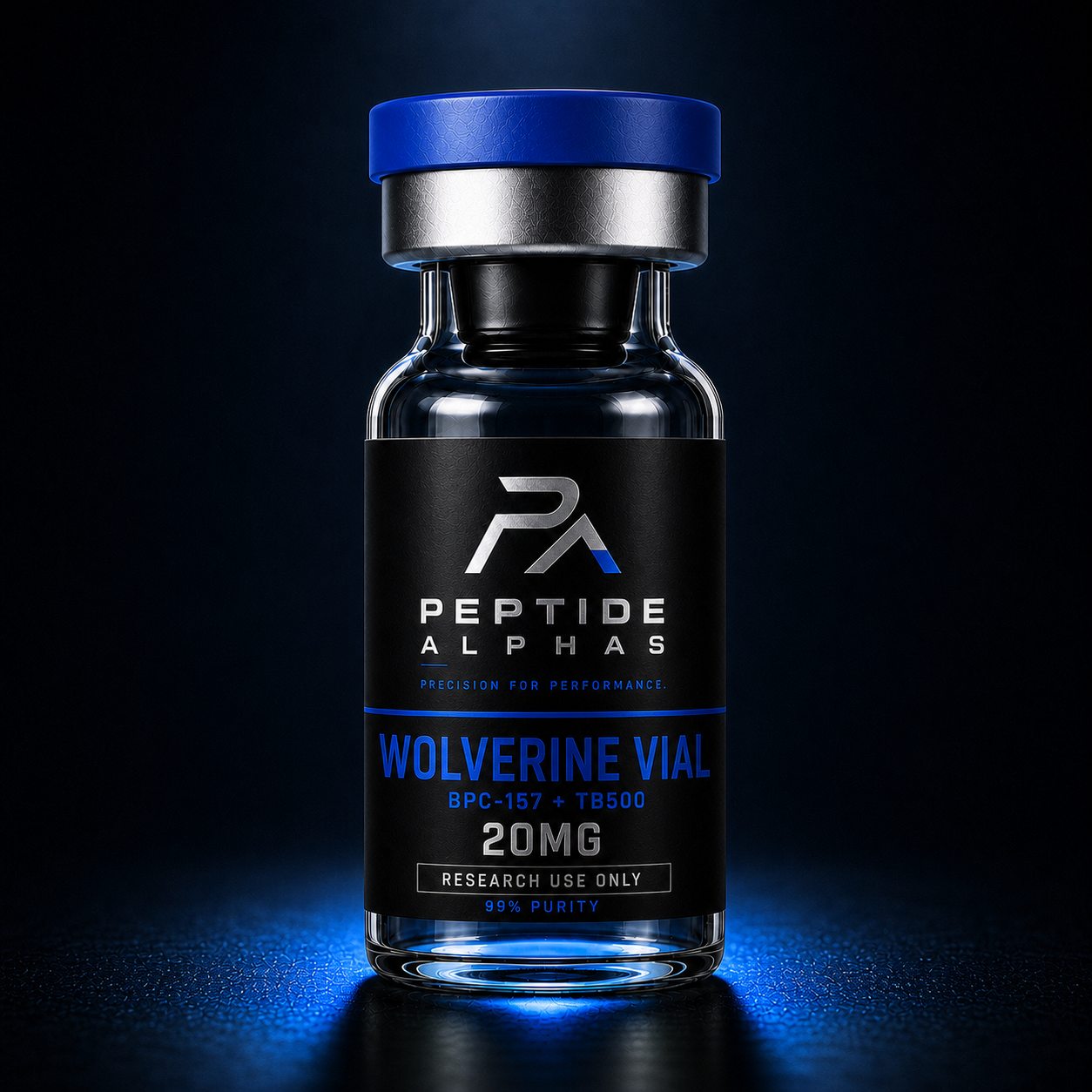
Peptide Alphas offers a pre-formulated BPC-157 and TB-500 blend under the name Wolverine, intended for researchers who wish to study this combination without sourcing and preparing each compound separately. Individual BPC-157 and TB-500 vials are also available for protocols requiring independent dosing control.
Dosing in Research Settings
BPC-157 Dosing Parameters
In published preclinical literature, BPC-157 doses are typically scaled proportionally to subject body weight. Research designs most commonly use 5 mg or 10 mg vial quantities. Administration schedules range from daily to every-other-day depending on the model and endpoint being studied. Both subcutaneous and intramuscular routes have been employed; some protocols use localized injection near the tissue of interest, while others use systemic administration to assess broader effects.
TB-500 Dosing Parameters
TB-500 research protocols frequently distinguish between an initial loading phase and a subsequent maintenance phase. During the loading period, higher doses are administered over the first several weeks of the study to establish baseline tissue levels. This is followed by a reduced maintenance schedule, often shifting to weekly administration. Available vial sizes are typically 5 mg and 10 mg. Administration is almost entirely parenteral, with subcutaneous injection being most common in rodent models.
Combined Protocol Considerations
When BPC-157 and TB-500 are studied together, researchers typically run each compound according to its own established schedule within a unified protocol. The TB-500 loading and maintenance structure is generally preserved, while BPC-157 is administered on its own daily or every-other-day cadence. Combined study periods in the literature tend to run approximately four to eight weeks, though this varies considerably with the tissue type and repair endpoint under investigation.
Frequently Asked Questions
Can BPC-157 and TB-500 be used together in a research protocol?
Yes. The combination is a well-documented research approach, sometimes referred to as the Wolverine Stack. The mechanistic complementarity of the two compounds, BPC-157's angiogenic and NO-modulating actions alongside TB-500's actin upregulation and cell migration effects, provides a clear scientific rationale for studying them together. Researchers may use either a pre-formulated blend or individually sourced compounds depending on whether independent dosing control is required by the study design.
Which compound is better suited to tendon and ligament repair research?
BPC-157 has the more extensive published research record specifically in tendon and ligament healing models, with multiple studies documenting effects on angiogenesis and growth factor modulation in connective tissue. TB-500 also shows activity relevant to connective tissue repair, primarily through its cell migration mechanisms. Some researchers hypothesize that the combination may offer advantages over either compound alone in these models, though direct comparative data remain limited.
Is BPC-157 stable enough for oral administration in research?
Yes. BPC-157 exhibits exceptional stability under gastric acid conditions, which is uncommon among peptides. This property has supported the development of oral formulations, including arginine salt preparations. TB-500 does not share this stability profile and is not considered suitable for oral administration in research settings.
How long do combined BPC-157 and TB-500 protocols typically run?
BPC-157 study periods in published literature commonly range from two to eight weeks. TB-500 protocols often follow a four-to-six-week loading phase followed by a maintenance period. Combined protocols generally align within this range, with total study duration adjusted to the specific repair model and tissue endpoint. Researchers designing their own protocols should consult the available literature for the most relevant precedents.
What purity standards are appropriate for research-grade BPC-157 and TB-500?
A minimum of 98% purity is generally regarded as the baseline threshold for research-grade peptides; 99% or higher is preferred for studies where contamination or degradation products could confound results. Independent third-party analytical testing and certificate of analysis (COA) documentation are standard requirements for verifying purity claims prior to use.
For research use only. Not for human consumption.
Research-grade peptides, documented.
99%+ purity, third-party Certificate of Analysis with every batch, discreet domestic shipping.
Browse Products