Ipamorelin: A Research Overview
An overview of Ipamorelin as a selective growth-hormone secretagogue studied in laboratory settings for its distinct GH-signalling properties.
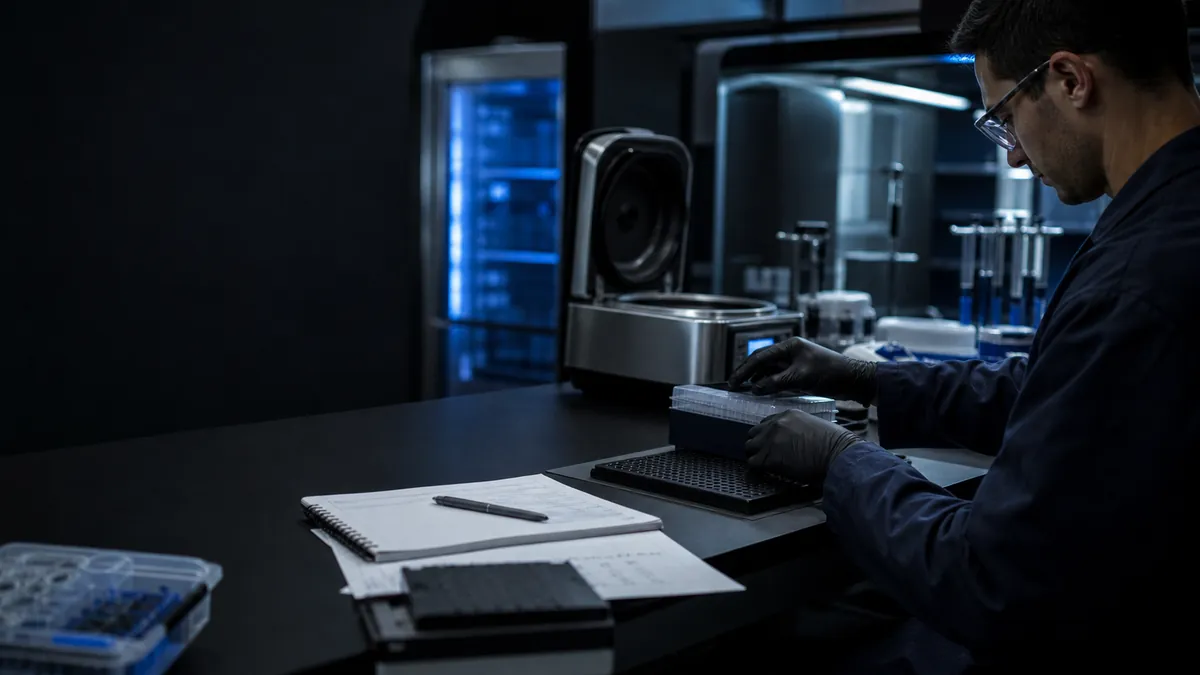
Ipamorelin is a synthetic pentapeptide classified as a growth-hormone secretagogue (GHS) and a selective agonist at the ghrelin receptor (GHS-R1a). It has attracted sustained interest across peptide-science disciplines, primarily because its receptor-binding profile distinguishes it from earlier secretagogue compounds. Research into its signalling behaviour continues to expand, making it a frequently referenced subject in laboratory literature concerned with the somatotropic axis.
Structural Identity and Receptor Selectivity
Structurally, Ipamorelin is a five-amino-acid sequence whose conformation allows it to engage GHS-R1a with a high degree of selectivity. Unlike several first-generation growth-hormone-releasing peptides, Ipamorelin does not substantially activate pathways associated with cortisol or prolactin release at the concentrations typically studied in vitro. This narrow receptor profile is one of its defining characteristics in the research literature and a principal reason it is examined as a reference compound when investigators aim to isolate GH-pathway effects from broader hormonal crosstalk.
The peptide operates upstream of the pituitary, where GHS-R1a stimulation promotes the pulsatile release of growth hormone from somatotroph cells. Because Ipamorelin acts through a ghrelin-mimetic mechanism rather than through growth-hormone-releasing hormone (GHRH) directly, it complements GHRH-analogue compounds in co-administration studies designed to characterise synergistic secretagogue effects.
Position Within Growth-Hormone Signalling Research
The somatotropic axis, which encompasses hypothalamic regulation, pituitary secretion, and downstream insulin-like growth factor (IGF-1) expression, remains an active area of study in metabolic biology and cellular physiology. Ipamorelin is used in laboratory models as a tool to probe specific nodes within this cascade. Its predictable, pulse-mimetic action on GH release makes it useful for experiments requiring reproducible hormonal stimuli under controlled conditions.
Researchers working with rodent models and cell-culture systems have employed Ipamorelin to investigate questions around:
- Pituitary responsiveness to ghrelin-receptor agonism across varying physiological states
- The relationship between GH pulse amplitude and downstream IGF-1 expression
- Comparative selectivity between GHS-R1a agonists of differing structural classes
- Baseline signalling dynamics in the hypothalamic-pituitary-somatotroph circuit
Handling and Storage in Laboratory Settings
Ipamorelin is supplied as a lyophilised (freeze-dried) powder and requires reconstitution before use in aqueous experimental protocols. Standard laboratory practice calls for reconstitution with bacteriostatic water or an appropriate sterile diluent. Once reconstituted, aliquots should be stored at 2-8 degrees C and used within a timeframe consistent with established peptide stability guidelines. Repeated freeze-thaw cycles degrade peptide integrity and should be avoided.
As with all research compounds, strict aseptic technique is expected throughout handling. Contamination of working solutions introduces confounding variables that compromise experimental reproducibility. Personnel handling the compound should follow applicable institutional biosafety protocols and consult the relevant safety data documentation prior to use.
Comparison with Related Secretagogue Compounds
Ipamorelin is frequently positioned alongside other GHS-R1a agonists, including GHRP-2 and GHRP-6, as well as non-peptide secretagogues. Its research appeal rests substantially on the selectivity advantage noted above: both GHRP-2 and GHRP-6 have been reported to elevate cortisol and prolactin in parallel with GH in certain experimental designs, whereas Ipamorelin produces a comparatively isolated GH signal. This property makes it a preferred tool in study designs where a clean GHS-R1a stimulus is methodologically important.
When combined with a GHRH analogue such as CJC-1295 in research models, Ipamorelin has been studied for its potential to amplify GH pulse magnitude through dual-pathway activation. Such co-administration paradigms are common in secretagogue research precisely because the two receptor systems can act additively at the level of the pituitary somatotroph.
Ongoing Scientific Interest
Ipamorelin continues to appear in peer-reviewed peptide and endocrinology literature as a benchmark compound for GHS-R1a pharmacology. Its well-characterised selectivity profile and reproducible secretagogue behaviour give it utility as a reference standard in studies comparing novel ghrelin-receptor ligands. As peptide synthesis and receptor-biology methodologies advance, Ipamorelin is likely to remain a standard reference point for investigators mapping the structural determinants of secretagogue selectivity.
Interest has also extended to in-vitro cell models examining GHS-R1a expression in non-pituitary tissues, reflecting a broader recognition that the ghrelin receptor is distributed across multiple organ systems. These lines of inquiry remain exploratory and represent an emerging frontier in peptide-signalling research.
For research use only. Not for human consumption.
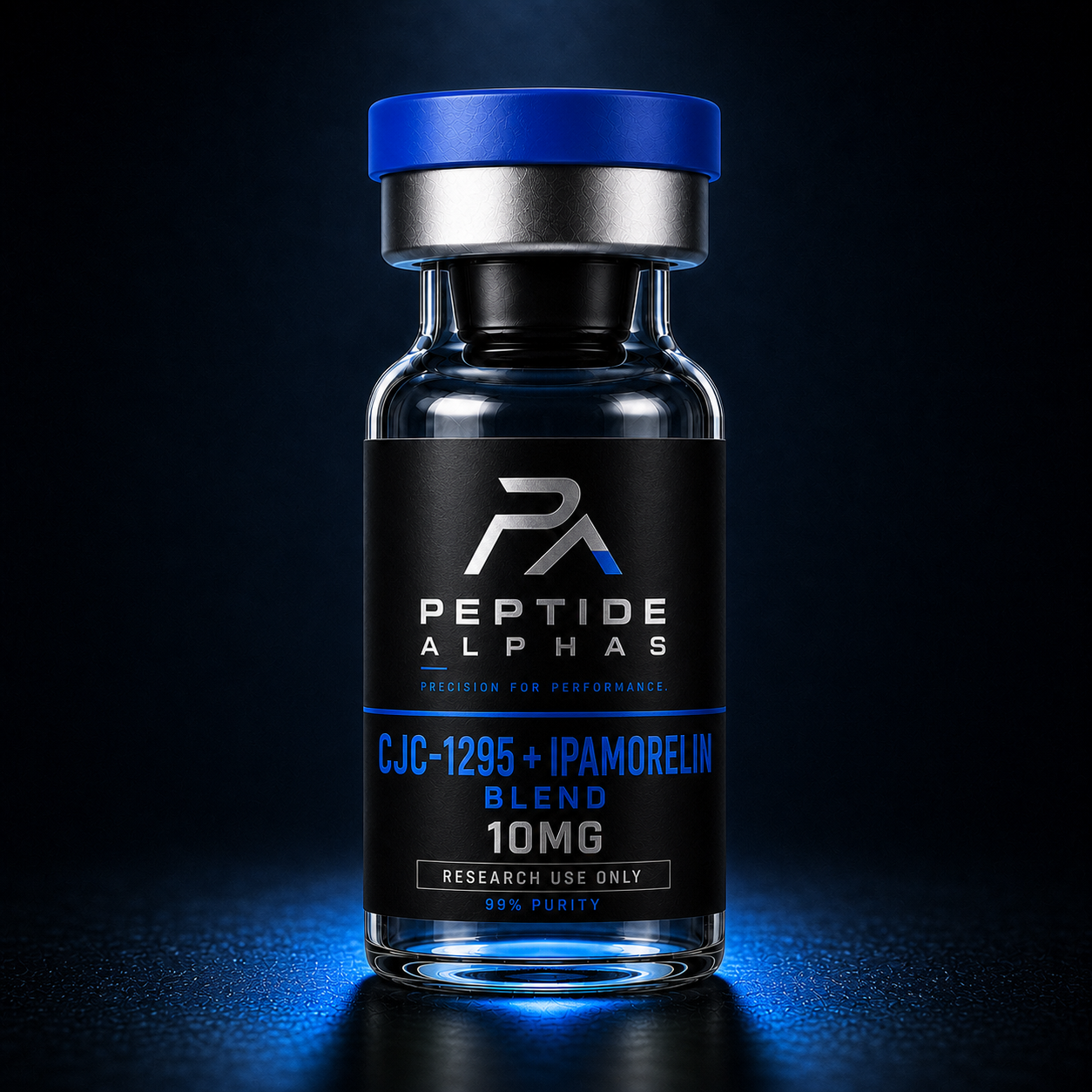
Research-grade peptides, documented.
99%+ purity, third-party Certificate of Analysis with every batch, discreet domestic shipping.
Browse Products