Retatrutide (Reta) Research Guide (2026)
A complete 2026 research overview of Retatrutide: triple-receptor mechanism, comparison with Semaglutide and Tirzepatide, research applications, and sourcing criteria.

Retatrutide, commonly referred to as "Reta" in research circles, has become one of the most closely watched peptide compounds of 2026. Its distinctive multi-receptor activity and the breadth of metabolic pathways it engages have drawn sustained attention from researchers studying energy regulation and related physiological systems. This guide covers the compound's mechanism of action, how it compares with earlier receptor agonists, its documented research applications, and the quality criteria that matter most when selecting a source.
What Is Retatrutide?
Retatrutide is a synthetic peptide classified as a triple receptor agonist. In preclinical and clinical research settings it has been studied for its capacity to engage three distinct receptor classes simultaneously: the glucagon-like peptide-1 (GLP-1) receptor, the glucose-dependent insulinotropic polypeptide (GIP) receptor, and the glucagon receptor. Each of these receptors participates in different aspects of metabolic regulation, and the simultaneous engagement of all three distinguishes Retatrutide from earlier generations of research peptides that targeted only one or two of these pathways.
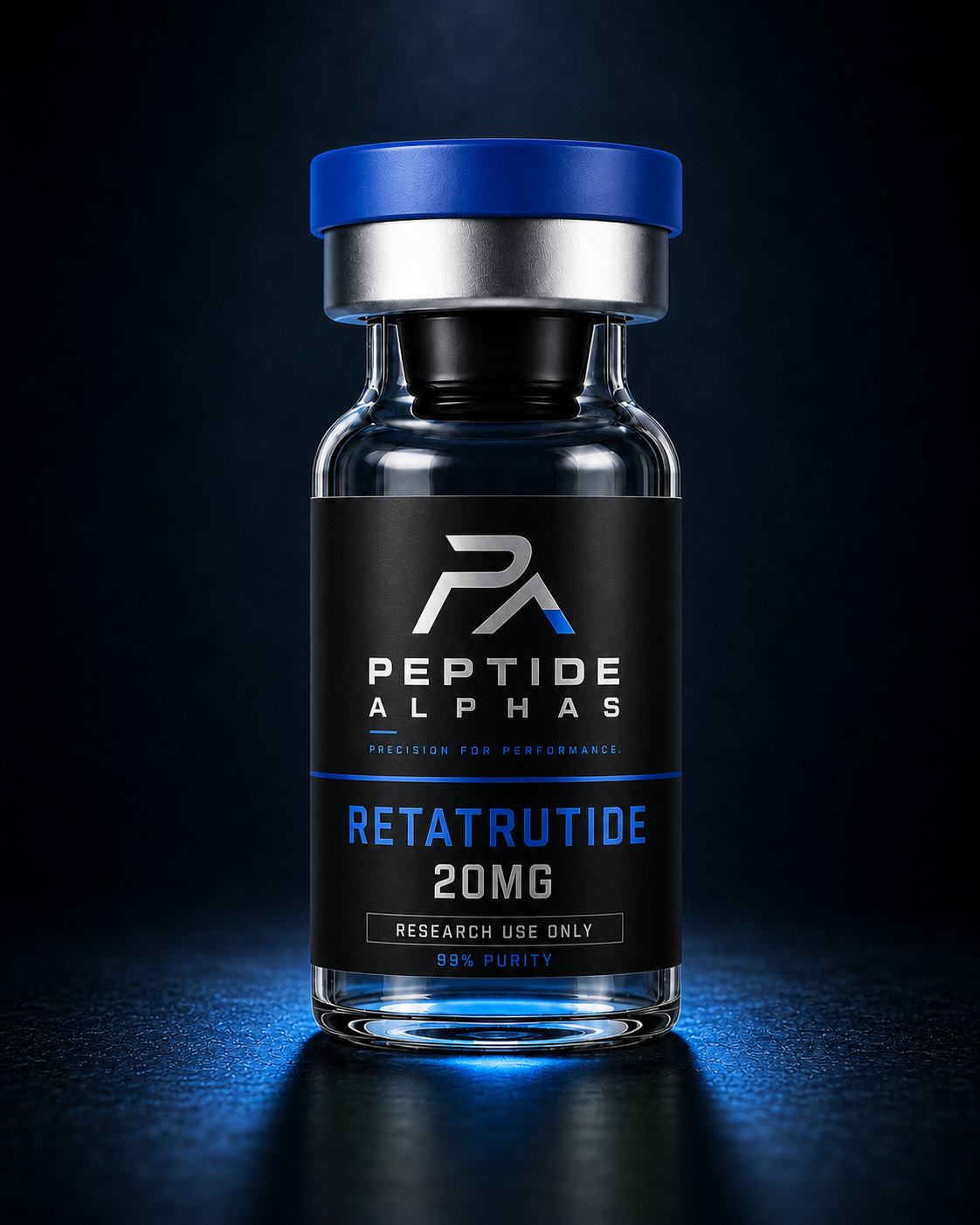
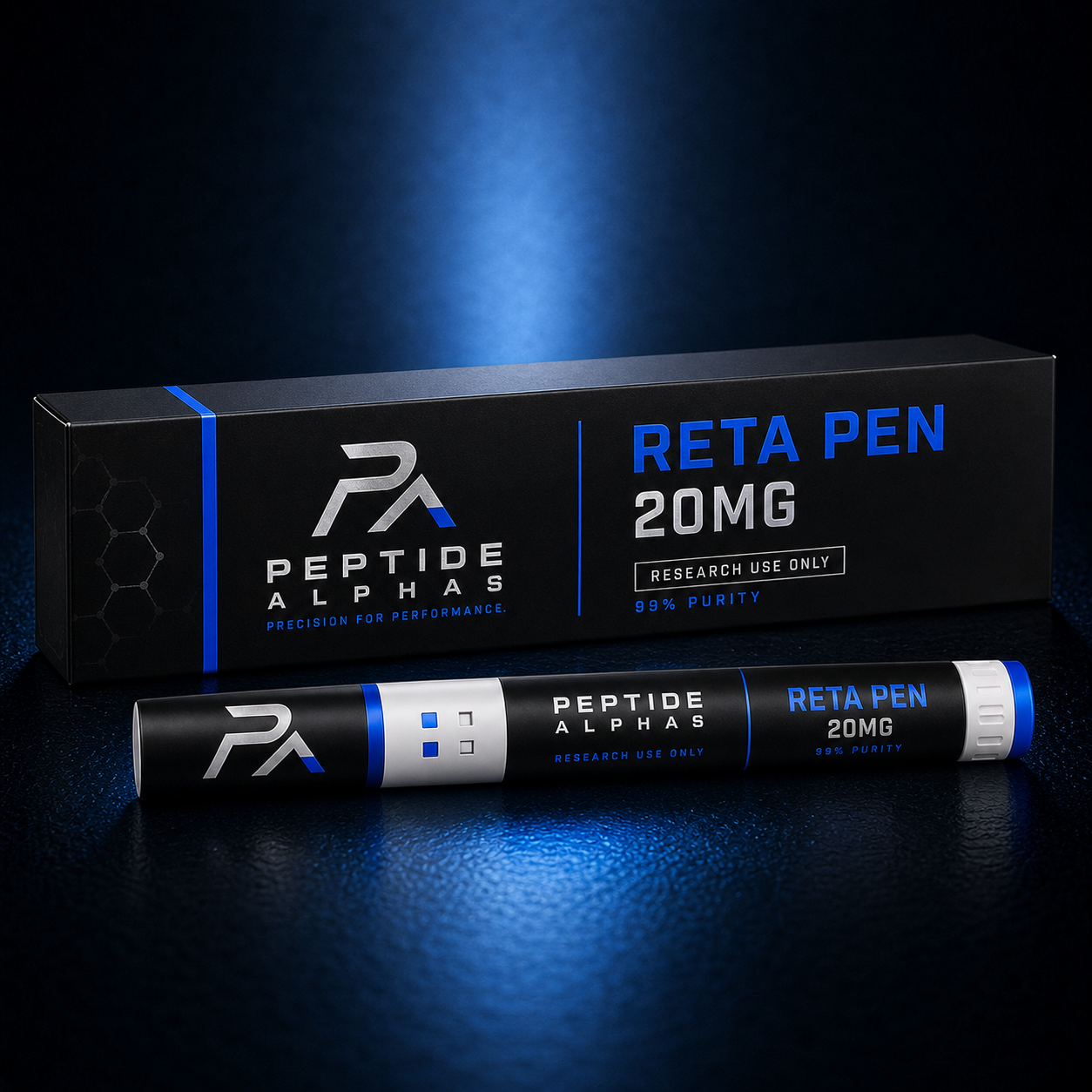
The compound is produced as a lyophilized (freeze-dried) powder and requires reconstitution with bacteriostatic water prior to use in laboratory protocols. Peptide Alphas offers Retatrutide in both vial and pre-filled pen formats to support a range of research configurations.
Why Retatrutide Is Attracting Research Interest in 2026
The growing body of published research around incretin-based compounds has prompted investigators to ask whether broader receptor engagement produces meaningfully different outcomes in metabolic models. Retatrutide sits at the center of that question. Compared to single-pathway and dual-pathway peptides, its triple-agonist profile opens several research avenues at once:
- Metabolic regulation studies: The combined GLP-1 and GIP signaling relevant to glucose and lipid handling has been well characterized in earlier compounds; Retatrutide allows researchers to study how adding glucagon receptor activity alters those dynamics.
- Energy expenditure pathways: Glucagon receptor activation is associated with thermogenic and energy-expenditure signaling in research models, a dimension not accessible with GLP-1 or dual GLP-1/GIP agonists alone.
- Appetite and satiety signaling: Central and peripheral appetite regulation involves overlapping receptor systems; the triple-agonist design allows investigation of how these signals interact when multiple receptor types are engaged concurrently.
- Fat metabolism mechanisms: Researchers have examined how the compound influences lipid mobilization pathways in preclinical models, adding to the mechanistic picture beyond glycemic endpoints.
Phase 2 data published during the compound's clinical development generated considerable discussion within the research community, with observations of metabolic effects that exceeded those recorded in comparable studies of earlier agonists. This has elevated Retatrutide to a high-priority compound for teams working on multi-receptor metabolic interventions.
Receptor Profile: Retatrutide Compared with Semaglutide and Tirzepatide
Understanding where Retatrutide fits relative to the two most prominent earlier compounds requires a clear look at each compound's receptor targeting:
- Semaglutide is a GLP-1 receptor agonist only. Its mechanism is confined to a single receptor class, acting on appetite regulation and glucose-dependent insulin secretion through that pathway.
- Tirzepatide is a dual GLP-1 and GIP receptor agonist. Adding GIP activity introduced a second metabolic input, with research models showing distinct effects on insulin sensitivity and fat tissue compared with GLP-1 agonism alone.
- Retatrutide extends this architecture by adding glucagon receptor agonism as a third target. The glucagon receptor component introduces energy expenditure modulation as an additional variable, a pathway that single and dual agonists do not address.
From a research design perspective, this progression creates a useful comparative framework. Investigators can design studies that isolate the contribution of each additional receptor by comparing outcomes across the three compound classes under controlled conditions. The glucagon component, in particular, is of interest because elevated glucagon receptor signaling has historically been associated with increased hepatic glucose output, meaning that its presence in a GLP-1/GIP background requires careful study of how the receptors interact and counterbalance one another in live research models.
This mechanistic complexity is precisely why Retatrutide is considered a next-generation compound rather than simply a refinement of its predecessors. The interactions between three concurrently activated receptor systems introduce research questions that cannot be addressed with simpler agonists.
Research Applications
Laboratory investigations involving Retatrutide have spanned several areas of metabolic and physiological research. The following represent the most frequently studied applications in published and ongoing work:
- Weight regulation models: Preclinical and early clinical research has examined body weight outcomes in models of diet-induced and genetic metabolic dysregulation.
- Hepatic metabolism studies: Given the glucagon receptor's known role in hepatic glucose production, researchers have studied how triple-agonist engagement affects liver metabolism, including lipid accumulation pathways relevant to non-alcoholic fatty liver models.
- Hormonal interaction research: The interplay between GLP-1, GIP, and glucagon signaling involves multiple endocrine feedback loops; Retatrutide provides a tool for studying how simultaneous receptor engagement modifies those loops.
- Cardiovascular metabolic investigations: Early-stage research has explored the compound's effects on cardiovascular metabolic markers in research models, extending from the cardiovascular research programs associated with earlier incretin-based peptides.
- Energy balance investigations: Studies examining total energy intake, resting metabolic rate proxies, and substrate oxidation patterns have used Retatrutide to probe the glucagon-driven energy expenditure component in greater depth.
It is important to state clearly: all of the above represents laboratory and research use only. Retatrutide is not approved for human therapeutic application and is intended solely for scientific research purposes.
What to Look for When Sourcing Retatrutide for Research
Research reproducibility depends directly on compound quality. A peptide of insufficient purity or uncertain identity introduces uncontrolled variables that can invalidate experimental results. The following criteria should guide any sourcing decision:
Purity Verification
Research-grade Retatrutide should meet a minimum purity threshold of 99% as determined by high-performance liquid chromatography (HPLC). Anything below this standard risks introducing contaminant peaks that may produce confounding activity in sensitive assays. Purity claims should always be backed by quantitative HPLC data, not stated without supporting documentation.
Third-Party Certificate of Analysis
A Certificate of Analysis (COA) issued by an accredited independent laboratory is the primary quality document for any research peptide. A batch-specific COA should confirm compound identity (typically by mass spectrometry), purity by HPLC, and sterility or endotoxin testing where applicable. Suppliers who cannot provide a current, batch-matched COA from a third-party laboratory should be excluded from consideration. Peptide Alphas provides third-party COAs with every batch.
Reconstitution and Storage Guidance
Reputable suppliers include clear documentation covering reconstitution protocol and storage requirements. Lyophilized Retatrutide requires proper handling to maintain structural integrity, and a supplier that cannot provide this guidance is unlikely to maintain appropriate standards throughout their manufacturing and storage processes.
Domestic Shipping and Handling
For researchers sourcing within Canada, domestic shipping eliminates the transit time and handling variability introduced by international logistics. Peptide Alphas ships domestically across Canada, with packaging designed to protect peptide stability during transit.
Batch Consistency
Reproducible research requires consistent compound quality across orders. Suppliers with documented quality control processes and a verifiable history of consistent batch performance reduce the risk of inter-experiment variability introduced by sourcing changes.
Frequently Asked Questions
Is Retatrutide approved for human use?
No. Retatrutide is a research compound that has not received regulatory approval for human therapeutic use in any jurisdiction. It is sold strictly for laboratory and scientific research purposes and is not intended for administration to humans or animals outside of approved research protocols.
How does Retatrutide differ from Tirzepatide in research models?
The principal difference is receptor scope. Tirzepatide activates two receptor classes (GLP-1 and GIP), whereas Retatrutide activates three (GLP-1, GIP, and glucagon). The additional glucagon receptor engagement introduces an energy expenditure component and hepatic metabolic activity that Tirzepatide does not address. In research models this results in a more complex signaling environment and allows investigators to study glucagon-mediated pathways within a background of GLP-1/GIP co-activation, which is not possible with the dual agonist.
Is it legal to purchase Retatrutide for research?
Retatrutide is available for purchase as a research chemical in many jurisdictions when acquired strictly for laboratory research purposes. Regulatory status varies by country and region. Buyers are responsible for understanding and complying with all applicable regulations in their own jurisdiction before placing an order.
How should Retatrutide be stored to maintain stability?
Lyophilized Retatrutide should be stored at -20°C for long-term preservation of structural integrity. Once reconstituted with bacteriostatic water, the solution should be kept refrigerated at 2°C to 8°C and used within the timeframe specified in the accompanying COA and product documentation. Repeated freeze-thaw cycles should be avoided, as they can degrade peptide structure and compromise research results.
What formats does Peptide Alphas offer for Retatrutide?
Peptide Alphas carries Retatrutide in both vial and pre-filled pen formats, supporting researchers who require different delivery configurations depending on their laboratory protocols. Full product details, including available formats and current batch COAs, are listed on the product pages.
Why is the glucagon receptor component significant in research terms?
Glucagon receptor signaling plays a distinct role in hepatic glucose production, thermogenesis, and energy substrate utilization. In the context of a GLP-1/GIP agonist background, the glucagon receptor adds a layer of metabolic regulation that is not captured by dual agonists. This makes Retatrutide a useful tool for researchers who want to study how all three receptor classes interact simultaneously and what that interaction means for net metabolic output in research models. The glucagon component is also of interest because its effects on hepatic lipid handling may have implications for liver-focused research programs.
For research use only. Not for human consumption.
Research-grade peptides, documented.
99%+ purity, third-party Certificate of Analysis with every batch, discreet domestic shipping.
Browse Products